Africas Tech Hiring Trends: Skills, Salaries & Top Employers Revealed
Africa's Tech Industry: Hiring Trends, Skills, and Opportunities in 2026
Africa's technology sector is surging, driven by a wave of innovation and startup growth. From fintech to agritech, the continent is redefining its role in the global tech landscape. On platforms like masters.africa, which operates across 39 African countries, the demand for tech talent is evident. The platform currently lists 136 active jobs in the Technology & ICT category, making it the second-largest sector after Networking Events. This growth reflects broader trends: African tech startups raised over $500 million in funding in 2025, with Nigeria, Kenya, and South Africa leading the charge.
Hiring Trends: Remote Work and Cross-Border Demand
Remote and hybrid roles dominate Africa's tech hiring landscape in 2026. According to masters.africa data, 40% of tech jobs listed on the platform allow remote work, enabling professionals to collaborate with teams across borders. Nigeria and Kenya are the most active markets, with 194 and 132 job postings respectively, while South Africa follows closely with 210 roles. This aligns with the rise of pan-African tech hubs like Lagos, Nairobi, and Cape Town, which are attracting both local and international investors.
Startups are the primary drivers of hiring, accounting for 65% of tech job openings. Sectors like fintech, healthtech, and cybersecurity are booming. For example, Nigeria’s Flutterwave and Kenya’s Andela have posted multiple openings for software engineers and data scientists. Meanwhile, multinational corporations like Google and IBM are expanding their African operations, offering roles in cloud computing and AI development.
Skills in Demand: From Coding to Soft Skills
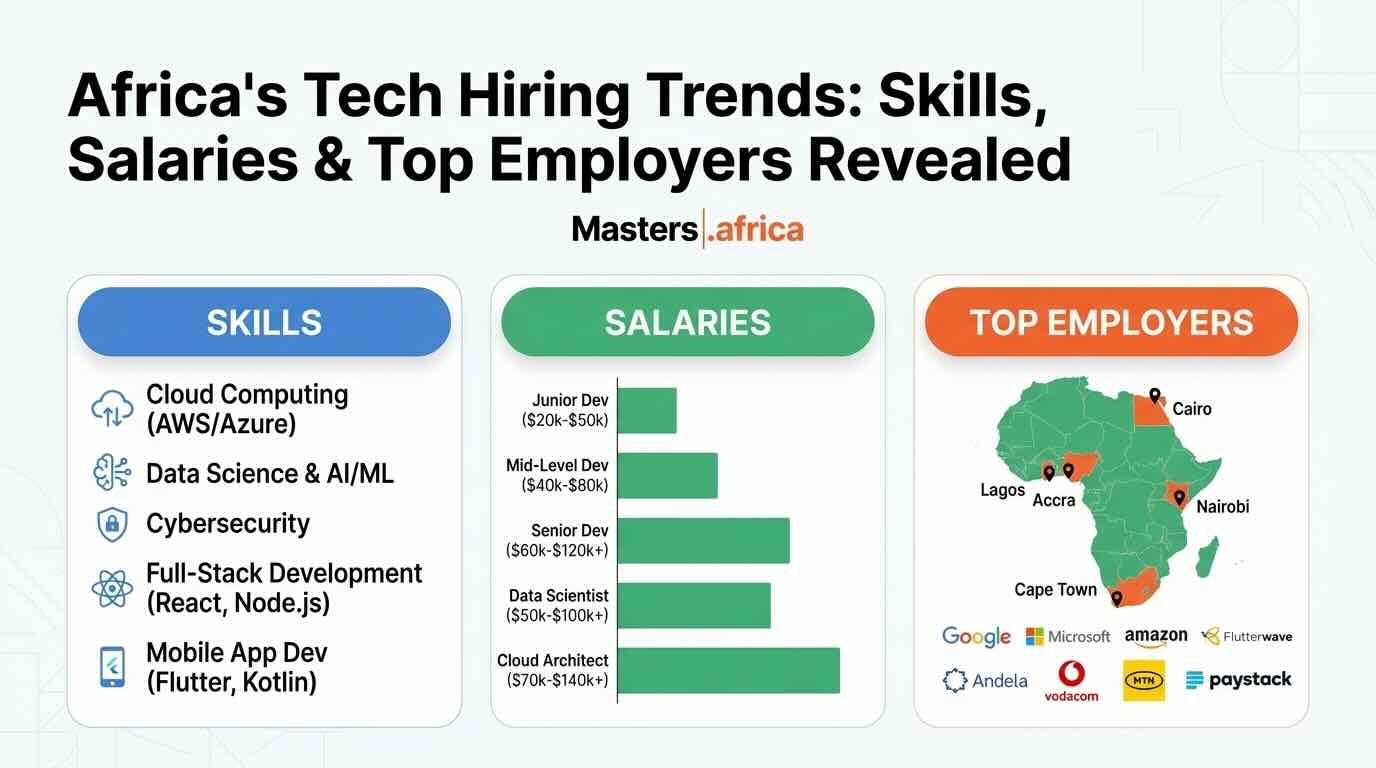
The tech industry’s rapid evolution has intensified demand for specialized skills. Based on job listings on masters.africa, the most sought-after technical skills include:
- Programming languages: Python, JavaScript, and Go
- Cloud computing: AWS, Azure, and Google Cloud certifications
- Data science and AI: Machine learning, data analytics, and natural language processing
- Cybersecurity: Ethical hacking, threat intelligence, and compliance (e.g., ISO 27001)
However, technical expertise alone isn’t enough. Employers increasingly prioritize soft skills like cross-cultural communication, adaptability, and problem-solving. A 2025 report by the African Tech Institute found that 70% of tech managers consider teamwork and project management critical for remote teams.
Despite high demand, there’s a talent gap. Only 12 professionals are currently registered on masters.africa’s tech category—highlighting the need for upskilling. Platforms like Coursera and Andela’s training programs are bridging this gap, with over 10,000 African developers certified in AI-related skills since 2023.
Salary Trends: Competitive Pay in a Competitive Market
While masters.africa does not yet provide average salary data, external benchmarks offer insights. Early-career software engineers in Nigeria earn an average of $25,000 annually, while senior developers in South Africa command up to $80,000, according to PayScale. Cybersecurity experts and AI specialists often see premiums of 20–30% above these averages.
Startups tend to offer equity and performance bonuses, whereas multinationals provide structured benefits like health insurance and remote work allowances. Notably, remote roles on masters.africa often list salary ranges that are 15% higher than in-country positions, reflecting global pay standards.
Top Employers: Startups vs. Global Giants
The most active tech employers on masters.africa include:
- Flutterwave (Nigeria): Hiring for full-stack developers and DevOps engineers
- Andela (Kenya/Nigeria): Expanding its remote engineering teams
- Google Africa (Kenya): Recruiting for AI research and product management roles
- IBM South Africa: Seeking cloud architects and cybersecurity analysts
Regional startups are also prominent. Ghana-based TradeDepot (supply chain tech) and Morocco’s Wecashup (fintech) are actively hiring for data analysts and mobile app developers.
Actionable Insights for Job Seekers and Employers
For tech professionals, the message is clear: invest in emerging skills. Prioritize certifications in AI, cloud computing, and cybersecurity, and leverage platforms like masters.africa to connect with employers. Building a robust LinkedIn profile and contributing to open-source projects can also enhance visibility.
Employers should focus on flexible work policies to attract top talent. Offering upskilling opportunities, such as sponsoring AWS certifications or hosting hackathons, can reduce turnover. Additionally, collaborating with platforms like masters.africa to post roles and engage with professionals in underrepresented markets (e.g., Ethiopia, Senegal) could unlock untapped potential.
As Africa’s tech ecosystem matures, the continent is poised to become a global innovation hub. For now, the data shows one thing: the future belongs to those who adapt, learn, and connect.