
Remote Work Opportunities in Africa — Complete Guide 2026
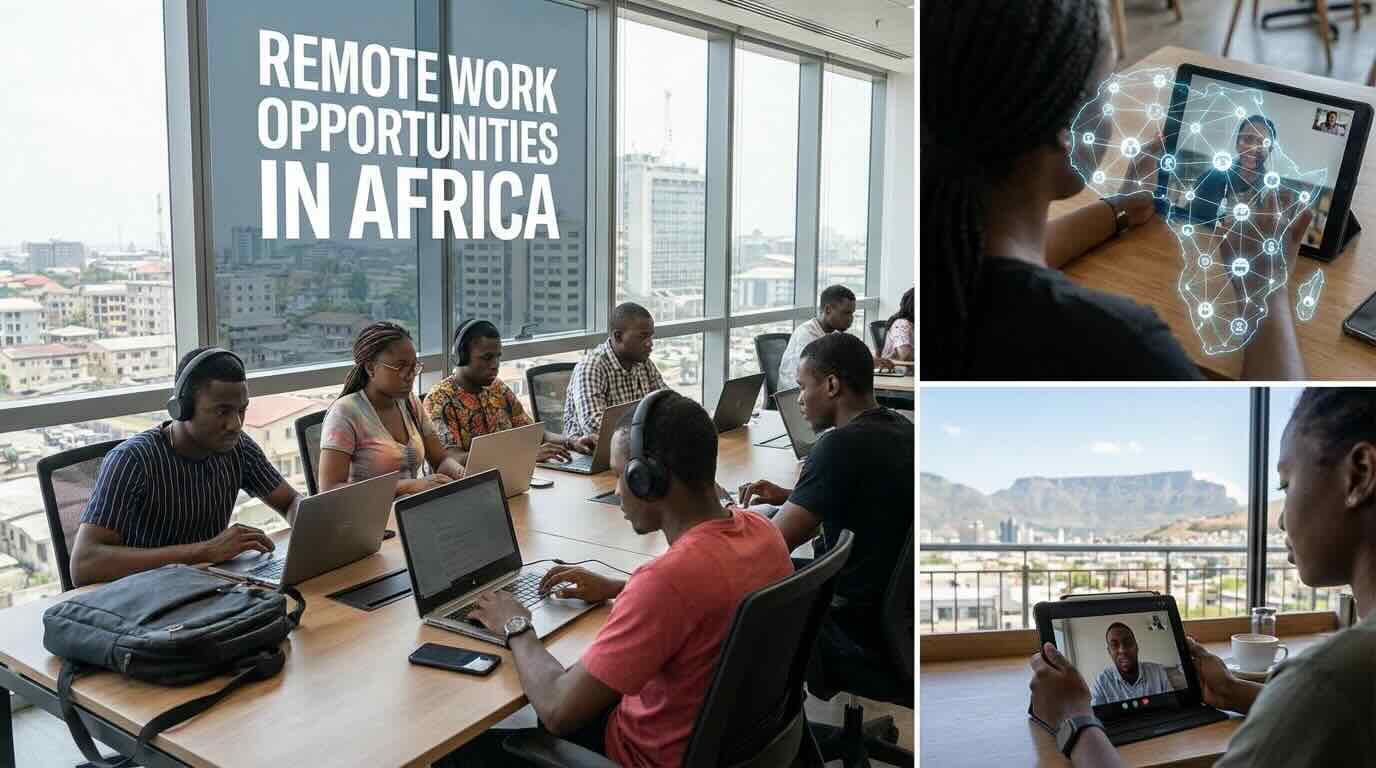
Remote Work Opportunities in Africa: The Complete Guide for 2026
The remote work revolution has fundamentally reshaped Africa's employment landscape. What began as a necessity during the global pandemic has evolved into a permanent feature of the continent's labor market, creating unprecedented opportunities for African professionals to access high-paying jobs from international companies without leaving their home countries.
In 2026, an estimated 15 million African professionals are engaged in some form of remote work, whether full-time remote positions with international employers, hybrid arrangements with local companies, or freelance work serving global clients. This comprehensive guide covers everything you need to know about remote work opportunities in Africa, from the most promising industries and platforms to practical tips on internet infrastructure, co-working spaces, and building a successful remote career.
To explore the latest remote-friendly positions, visit the Masters Africa job board, where many listings now include remote work options.
Why Remote Work Is Transforming Africa's Economy
Remote work is not just a convenience for African professionals. It represents a structural economic shift with far-reaching implications.
Closing the Global Pay Gap
Perhaps the most significant impact of remote work in Africa is its role in narrowing the wage gap between African professionals and their counterparts in developed markets. A senior software developer in Nairobi who might earn KSh 500,000 per month working locally can command USD 6,000 to 10,000 per month working remotely for a US or European company. This influx of foreign currency spending power has a multiplier effect on local economies.
Reversing Brain Drain
For decades, Africa has suffered from brain drain as its most talented professionals emigrated to pursue better opportunities abroad. Remote work offers an alternative: professionals can earn international salaries while remaining in their home countries, close to family and community. This "brain gain" effect is particularly pronounced in tech hubs like Nairobi, Lagos, Cape Town, and Kigali.
Expanding Access to Talent
For international employers, Africa represents an enormous pool of skilled, English-speaking (and French-speaking) talent across multiple time zones. Companies looking to build distributed teams find African professionals particularly attractive due to their strong work ethic, cultural adaptability, and competitive compensation expectations relative to Western markets.
Top Remote-Friendly Industries in Africa
While remote work opportunities exist across many sectors, certain industries have embraced distributed work more enthusiastically than others.
Software Development and Engineering
Software development remains the most accessible path to remote work for African professionals. The demand for developers is global, and coding skills are easily evaluated and demonstrated regardless of location. Key areas of demand include full-stack web development with React, Node.js, Python, and Django; mobile app development with Flutter, React Native, and Swift; cloud engineering and DevOps with AWS, Azure, and Google Cloud; blockchain and Web3 development; and AI and machine learning engineering.
African developers working remotely for international companies can earn between USD 3,000 and USD 15,000 per month, depending on experience, specialization, and the employer's location. Find remote development roles on our developer hiring page.
Digital Marketing and Content Creation
Digital marketing is inherently location-independent, making it an excellent remote career path. African professionals with strong English or French writing skills, analytical capabilities, and marketing expertise are in high demand globally. Roles include SEO specialists and content strategists, paid advertising managers for Google Ads, Meta, and TikTok, email marketing specialists, social media managers, and content writers and copywriters.
Remote digital marketing salaries for African professionals typically range from USD 1,500 to USD 8,000 per month, depending on the specific role and experience level.
Customer Support and Success
Many international companies have discovered that African professionals excel in customer-facing roles due to strong communication skills, cultural empathy, and favorable time zone overlap with European markets. Remote customer support and success roles include technical support representatives, customer success managers, community managers, account managers, and help desk and IT support specialists.
These roles typically pay between USD 1,000 and USD 5,000 per month for remote positions with international companies.
Design and Creative Services
The creative industry offers abundant remote opportunities for African designers. Graphic design, UX/UI design, motion graphics, video editing, and illustration are all roles that can be performed entirely remotely. With the growth of Africa's creative economy and global appreciation for African design aesthetics, this sector presents exciting opportunities.
Finance and Accounting
Remote finance and accounting roles have grown significantly as cloud-based accounting software and digital collaboration tools have made location irrelevant for many financial tasks. Roles include bookkeeping and accounting services, financial analysis and modeling, tax preparation and advisory, audit support, and payroll management. Professionals with international certifications such as ACCA, CPA, or CFA are particularly well-positioned for remote finance roles.
Virtual Assistance and Administrative Support
Virtual assistance has become a thriving remote career for many African professionals. This field has a low barrier to entry but can be quite lucrative for those who specialize and deliver excellent service. Executive virtual assistants supporting C-level executives at international companies can earn USD 1,500 to USD 4,000 per month.
Top Platforms for Finding Remote Work in Africa
Finding legitimate remote work opportunities requires knowing where to look. Here are the most effective platforms for African professionals in 2026.
Africa-Focused Platforms
- Masters Africa — Comprehensive job board connecting African talent with local and international employers, including remote positions across all industries
- Andela Talent Network — Focused on connecting African tech talent with global companies
- Gebeya — East Africa-focused platform for tech and digital talent
- Jobberman — West Africa's leading job platform with a growing remote section
Global Remote Work Platforms
- Toptal — High-end freelance platform for software, design, and finance professionals
- Upwork — Largest global freelancing platform with diverse opportunities
- Remote.com — Platform specializing in full-time remote positions with international companies
- We Work Remotely — Curated remote job board popular with tech companies
- Deel and Remote.com — Employer of record platforms that make it easy for companies to hire Africans remotely
Industry-Specific Platforms
- GitHub Jobs and Stack Overflow Jobs — For software developers
- Dribbble and Behance — For designers seeking remote creative work
- Contently and nDash — For content writers and journalists
Internet Infrastructure Across Africa
Reliable internet connectivity is the foundation of successful remote work. The good news is that Africa's internet infrastructure has improved dramatically in recent years, though significant disparities remain.
Countries with the Best Internet for Remote Work
South Africa leads the continent with average broadband speeds exceeding 40 Mbps in major cities. Cape Town and Johannesburg offer fiber-to-the-home connections with speeds up to 1 Gbps through providers like Vumatel and Openserve.
Kenya has invested heavily in fiber infrastructure. Nairobi offers reliable connections averaging 25 to 50 Mbps through providers like Safaricom Home Fibre and Zuku. The city's tech ecosystem has driven consistent infrastructure improvements.
Nigeria presents a mixed picture. Lagos and Abuja have reasonably reliable internet with speeds averaging 15 to 30 Mbps, but consistency can be challenging. Many remote workers rely on backup connections and portable MiFi devices.
Rwanda has one of Africa's most ambitious digital infrastructure programs. Kigali offers reliable and affordable internet, making it an increasingly popular base for remote workers.
Ghana provides reliable internet in Accra and other major cities, with Vodafone and MTN offering competitive fiber packages averaging 20 to 40 Mbps.
Practical Tips for Reliable Connectivity
- Always have a backup internet connection, typically a mobile data plan from a different provider than your primary connection
- Invest in a UPS or power bank to handle power outages, which remain common in many African cities
- Consider a Starlink subscription, which has expanded availability across Africa and offers reliable satellite internet as a backup
- Use a VPN for security, especially when working from public Wi-Fi
- Test your internet speed regularly and communicate proactively with clients about any connectivity challenges
Co-Working Spaces Across Africa
Co-working spaces have proliferated across Africa's major cities, providing remote workers with professional environments, reliable internet, networking opportunities, and a separation between work and home life.
Nairobi, Kenya
Nairobi boasts one of Africa's most vibrant co-working ecosystems. Notable spaces include Nairobi Garage in Westlands, offering premium facilities for startups and remote professionals. iHub, one of Africa's pioneering tech hubs, provides workspace and community events. The Alchemist combines co-working with a social venue. Prices range from KSh 15,000 to KSh 30,000 per month for a dedicated desk.
Lagos, Nigeria
Lagos has a thriving co-working scene centered in Victoria Island, Lekki, and Yaba. Co-Creation Hub (CcHUB) in Yaba is the epicenter of Nigeria's tech ecosystem. Leadspace and Venia Hub offer affordable options. The Zone by Wework-style operators provides premium facilities. Monthly costs range from NGN 50,000 to NGN 200,000 depending on the location and amenities.
Cape Town, South Africa
Cape Town has established itself as one of Africa's top destinations for remote workers and digital nomads. Workshop17 at the V&A Waterfront offers stunning workspace with harbor views. Spin Street House provides a creative community atmosphere. WeWork Cape Town offers the global brand's standard of facilities. Prices range from ZAR 2,500 to ZAR 6,000 per month.
Kigali, Rwanda
The Office and Impact Hub Kigali are leading co-working spaces that cater to the growing remote work community. Rwanda's safety, cleanliness, and reliable infrastructure make Kigali an increasingly attractive base. Monthly costs are competitive at USD 100 to USD 300.
Accra, Ghana
Impact Hub Accra, iSpace, and Workshed offer quality co-working environments. Accra's growing tech scene and welcoming culture make it a popular choice for remote workers. Monthly costs range from GHS 500 to GHS 1,500.
Tips for Building a Successful Remote Career in Africa
Remote work offers incredible opportunities, but success requires discipline, strategy, and continuous self-improvement.
Build a Strong Online Presence
Your online profile is your storefront in the remote work economy. Invest time in creating a polished LinkedIn profile with a professional photo and detailed experience. Build a portfolio website showcasing your best work. Contribute to open-source projects or publish content in your area of expertise. Create a comprehensive profile on Masters Africa to increase your visibility to employers.
Master Asynchronous Communication
Most remote teams span multiple time zones, making asynchronous communication a critical skill. Learn to write clear, comprehensive messages that minimize back-and-forth. Document your work thoroughly. Use tools like Loom for video explanations, Notion for documentation, and Slack for structured team communication.
Invest in Your Home Office Setup
A productive home office does not need to be expensive, but it should be intentional. Key investments include a reliable laptop with at least 16GB of RAM, a comfortable ergonomic chair, a good quality headset with noise cancellation for calls, an external monitor for increased productivity, and adequate lighting for video calls.
Manage Your Time and Energy
Remote work freedom can become a double-edged sword if boundaries are not established. Set clear working hours and communicate them to your team. Use time-tracking tools like Toggl or Clockify. Take regular breaks to avoid burnout. Separate your workspace from your living space if possible.
Handle Taxes and Legal Compliance
Understanding the tax implications of remote work is essential. In most African countries, income earned from foreign clients is still subject to local income tax. Consider consulting a tax professional familiar with remote work arrangements. Some countries like Rwanda and Kenya have introduced specific provisions for remote workers and digital nomads.
Continuously Upskill
The remote job market is competitive, and staying relevant requires continuous learning. Dedicate time each week to learning new skills, earning certifications, and staying current with industry trends. Many employers offer learning stipends as part of their remote work benefits.
Overcoming Common Remote Work Challenges
Power Supply Issues
Unreliable electricity remains a challenge in many African countries. Invest in a quality UPS that can power your laptop and router for at least two to four hours. Consider a small solar panel setup for extended outages. Many co-working spaces have generator backup, making them a reliable alternative during power disruptions.
Isolation and Loneliness
Remote work can be isolating, especially in cultures where communal work environments are the norm. Combat this by joining co-working spaces, participating in online communities for remote workers in Africa, attending local tech meetups and events, and scheduling regular video calls with colleagues rather than relying solely on text communication.
Payment and Currency Challenges
Receiving international payments can be complicated in some African countries. Research the best options for your location. Popular solutions include Payoneer and Wise (formerly TransferWise) for receiving USD, EUR, and GBP. Cryptocurrency payments are growing in popularity for freelancers. Some employers use platforms like Deel or Remote.com that handle local currency payroll.
The Future of Remote Work in Africa
The trajectory for remote work in Africa points firmly upward. Several trends will shape the landscape in the coming years. Infrastructure investment continues to accelerate, with undersea cables, 5G rollout, and satellite internet expanding connectivity across the continent. Governments are recognizing the economic potential of remote work, with digital nomad visas and favorable tax regimes emerging in several countries. Artificial intelligence tools are augmenting the capabilities of remote workers, allowing them to compete at higher levels. The growing pool of experienced remote African professionals creates a positive feedback loop, as their success stories attract more professionals and more employers to the market.
Conclusion
Remote work represents one of the most significant economic opportunities for African professionals in a generation. Whether you are a software developer, designer, marketer, writer, or administrator, the global remote job market offers pathways to competitive compensation, professional growth, and career flexibility that were previously available only through emigration.
The key to success lies in building the right skills, establishing a reliable infrastructure, and consistently delivering high-quality work. Start by exploring opportunities on Masters Africa, building your professional profile, and taking the first step toward a remote career that can transform your financial future while keeping you connected to the continent you call home.
Are you an employer looking to tap into Africa's incredible remote talent pool? Explore our hiring plans to connect with qualified professionals across the continent.