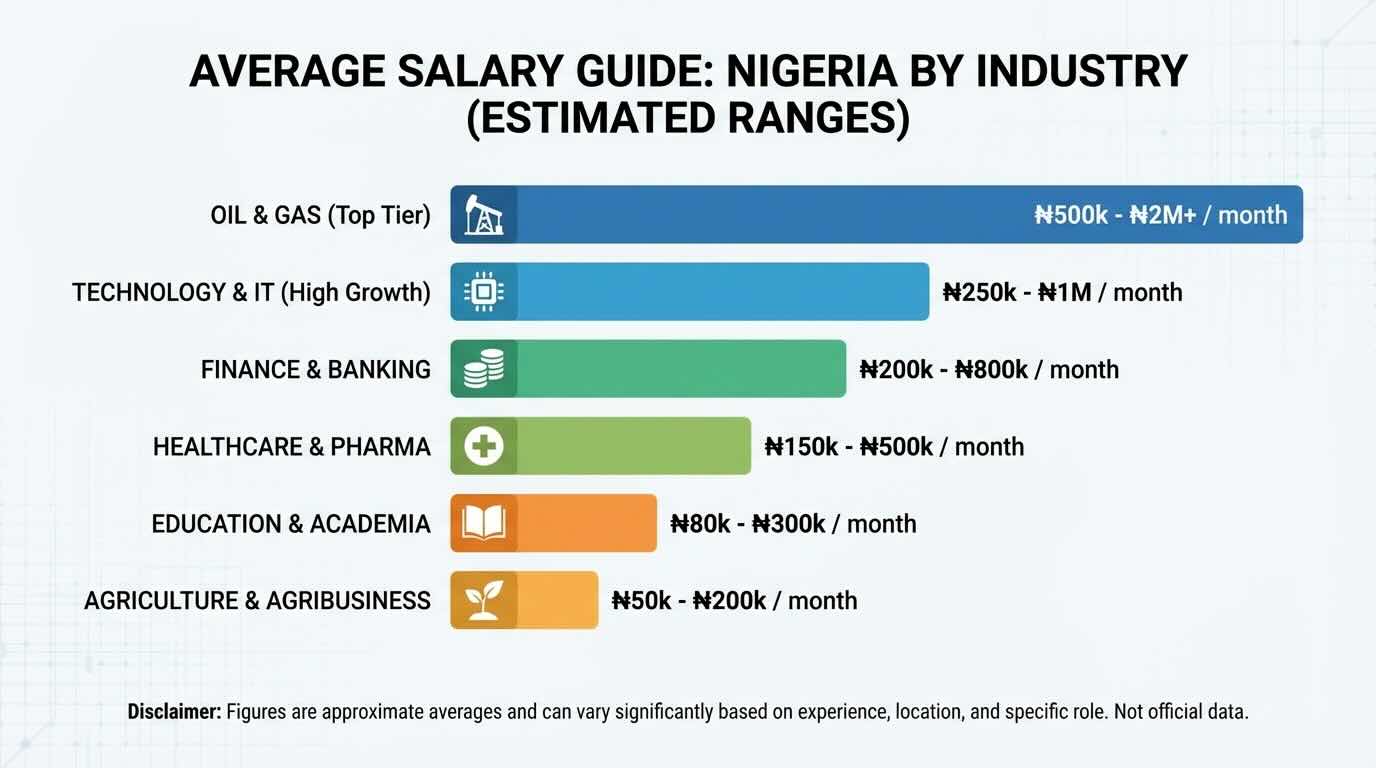
Salary Comparison: Africa vs Global Market 2026
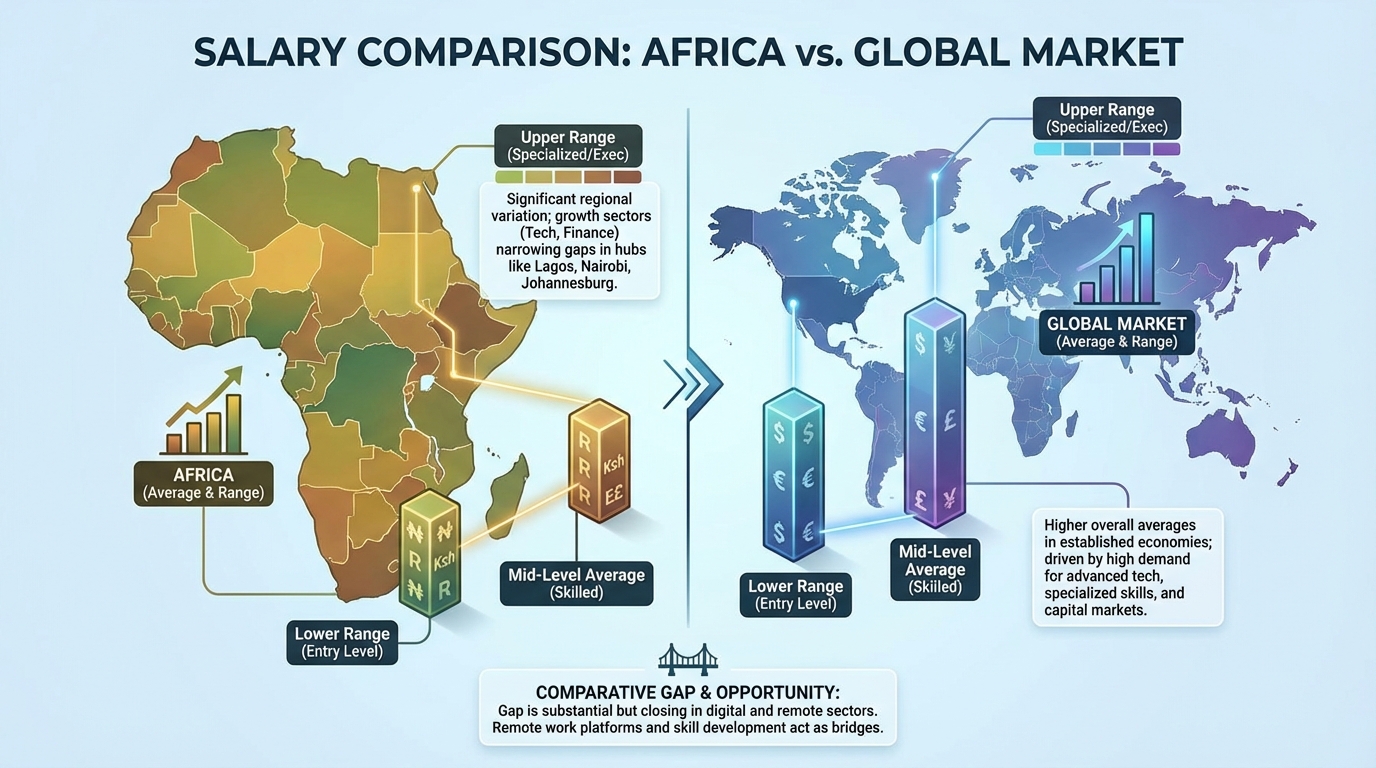
Salary Comparison: Africa vs Global Market 2026
Understanding how salaries in Africa compare to the rest of the world is essential for professionals evaluating career opportunities, employers benchmarking their compensation packages, and policymakers working to attract and retain talent on the continent. In 2026, the global labour market is more interconnected than ever, with remote work, digital nomadism, and cross-border recruitment blurring the traditional boundaries between local and international salary markets. This comprehensive analysis compares salaries across five key professions — software developers, nurses, accountants, engineers, and teachers — in African countries versus the United States, United Kingdom, India, and the Middle East. We also provide a purchasing power parity (PPP) adjusted analysis that accounts for the significant differences in cost of living across these regions.
Whether you are a professional considering relocation, an employer designing competitive compensation packages, or simply curious about how African salaries stack up against global benchmarks, this guide provides the data and analysis you need. For the latest salary data and job opportunities across Africa, visit masters.africa's salary insights page.
Methodology: How We Compare Salaries
Nominal vs PPP-adjusted salaries
When comparing salaries across countries, it is essential to consider two different measures. Nominal salary is the actual amount of money a worker receives in local currency, converted to US dollars at current exchange rates. This measure is useful for understanding the absolute earning potential in each market but does not account for differences in the cost of living. A salary of $50,000 in Lagos has very different purchasing power than the same amount in New York City.
Purchasing Power Parity (PPP) adjusted salary accounts for the differences in the cost of goods and services between countries. PPP conversion factors, published by the World Bank and International Monetary Fund, allow us to compare the real purchasing power of salaries across different economies. A PPP-adjusted comparison reveals that many African salaries, while lower in nominal terms, provide a more competitive standard of living than the raw numbers suggest.
Data sources and limitations
Our salary data is compiled from multiple sources including employer surveys, job board postings, government labour statistics, and recruitment agency reports. All figures represent median annual gross salaries for 2026, expressed in US dollars. Salaries can vary significantly based on factors such as employer size, specific location within a country, years of experience, educational qualifications, and negotiation skills. The figures presented here should be used as general benchmarks rather than precise predictions for individual situations.
Software Developers: Salary Comparison
Nominal salaries (annual, USD)
Software development is one of the most globally competitive professions, with African developers increasingly competing for roles in both local and international markets. The rise of remote work has been particularly transformative for African tech professionals, many of whom now earn international-level salaries while living on the continent.
- Nigeria (Lagos): $15,000 — $45,000 for mid-level developers, with senior developers and tech leads earning $40,000 — $75,000. Top-tier developers working for international companies remotely can earn $60,000 — $120,000.
- South Africa (Johannesburg/Cape Town): $25,000 — $55,000 for mid-level developers, $50,000 — $85,000 for senior roles. South Africa's mature tech ecosystem and stronger currency contribute to relatively higher salaries compared to other African markets.
- Kenya (Nairobi): $12,000 — $35,000 for mid-level developers, $30,000 — $60,000 for senior positions. Nairobi's vibrant startup scene and presence of major tech companies like Google, Microsoft, and IBM help support competitive salaries.
- Egypt (Cairo): $10,000 — $30,000 for mid-level, $25,000 — $50,000 for senior developers. Egypt's large population of tech graduates creates a competitive talent pool with moderate salary expectations.
- United States: $90,000 — $140,000 for mid-level developers, $130,000 — $200,000 for senior roles, with Silicon Valley and New York commanding premiums of 20 to 40 percent above these ranges.
- United Kingdom: $60,000 — $100,000 for mid-level, $95,000 — $150,000 for senior developers, with London salaries typically 25 to 35 percent higher than the national average.
- India (Bangalore/Hyderabad): $8,000 — $25,000 for mid-level, $22,000 — $50,000 for senior developers. India's vast talent pool keeps salaries competitive despite strong demand.
- Middle East (UAE/Saudi Arabia): $40,000 — $80,000 for mid-level, $70,000 — $130,000 for senior developers, with tax-free salaries significantly boosting take-home pay.
PPP-adjusted analysis for software developers
When we adjust for purchasing power parity, the picture changes dramatically. A mid-level developer earning $25,000 in Lagos has approximately the same purchasing power as someone earning $55,000 to $60,000 in New York, because the cost of housing, food, transportation, and services in Lagos is substantially lower. Similarly, a senior developer earning $50,000 in Nairobi enjoys a comparable lifestyle to a developer earning $90,000 to $100,000 in London.
This PPP advantage is one of the reasons why many African tech professionals choose to remain on the continent even when offered opportunities abroad. The combination of a lower cost of living with a growing tech ecosystem, improving infrastructure, and strong community ties makes African tech hubs increasingly attractive for both local and returning diaspora talent. Explore tech opportunities across Africa on masters.africa.
Nurses: Salary Comparison
Nominal salaries (annual, USD)
Nursing is one of the most critical and globally mobile professions, with significant salary disparities between Africa and developed markets driving ongoing brain drain from the continent. Understanding these disparities is essential for healthcare policymakers, hospital administrators, and nurses themselves.
- Nigeria: $3,500 — $8,000 for registered nurses in public hospitals, $6,000 — $14,000 in private hospitals and international health organisations.
- South Africa: $12,000 — $22,000 for registered nurses in public sector, $18,000 — $30,000 in private sector. Specialist nurses (ICU, theatre, oncology) can earn $25,000 — $38,000.
- Kenya: $4,500 — $10,000 in public hospitals, $7,000 — $16,000 in private healthcare and NGO settings.
- Ghana: $3,000 — $7,000 in public sector, $5,000 — $12,000 in private and international health organisations.
- United States: $65,000 — $95,000 for registered nurses, with specialist nurses earning $80,000 — $130,000. Travel nurses can earn significantly more during shortage periods.
- United Kingdom: $32,000 — $48,000 for band 5 to 6 nurses (NHS), $42,000 — $60,000 for specialist and senior nurses. London weighting adds approximately 15 to 20 percent.
- India: $2,500 — $6,000 in public hospitals, $4,000 — $10,000 in corporate hospitals and international healthcare chains.
- Middle East (UAE/Saudi): $25,000 — $50,000 tax-free for registered nurses, with Western-trained nurses commanding premium packages that include housing and flight allowances.
PPP-adjusted analysis for nurses
Even after PPP adjustment, African nursing salaries significantly lag behind developed market equivalents. A nurse earning $6,000 in Nigeria has PPP-adjusted purchasing power of approximately $15,000 to $18,000 — still far below the $65,000 to $95,000 earned by counterparts in the United States. This massive gap is the primary driver of nurse migration from Africa to the UK, USA, Middle East, and other developed markets. The World Health Organisation estimates that Africa loses billions of dollars annually in training investment due to healthcare worker migration, a challenge that requires structural solutions including improved working conditions, better compensation, and career development opportunities for healthcare professionals on the continent.
Accountants: Salary Comparison
Nominal salaries (annual, USD)
Accounting and finance professionals are in high demand across Africa as economies grow, regulatory requirements increase, and companies seek to improve financial management and compliance.
- Nigeria (qualified, ICAN/ACCA): $8,000 — $20,000 for mid-level accountants, $18,000 — $45,000 for financial managers, $35,000 — $80,000 for CFOs in large companies.
- South Africa (CA-SA qualified): $25,000 — $45,000 for newly qualified CAs, $40,000 — $70,000 for financial managers, $80,000 — $200,000 for CFOs in JSE-listed companies.
- Kenya (CPA-K qualified): $7,000 — $18,000 for mid-level, $15,000 — $40,000 for senior accountants and financial managers.
- United States (CPA): $55,000 — $80,000 for mid-level, $90,000 — $140,000 for senior managers, $150,000 — $350,000+ for CFOs in large corporations.
- United Kingdom (ACA/ACCA): $45,000 — $70,000 for mid-level, $75,000 — $120,000 for senior managers and directors.
- India (CA qualified): $6,000 — $15,000 for mid-level, $12,000 — $30,000 for senior positions in Big Four firms.
- Middle East (UAE): $30,000 — $60,000 for mid-level, $55,000 — $100,000 for senior roles, tax-free.
PPP-adjusted analysis for accountants
South African chartered accountants enjoy relatively strong PPP-adjusted salaries, with a newly qualified CA earning $30,000 enjoying purchasing power equivalent to approximately $50,000 to $55,000 in the UK. Nigerian accountants face a wider gap, though PPP adjustment brings their effective purchasing power closer to Indian counterparts. The Big Four accounting firms (Deloitte, PwC, EY, KPMG) generally offer above-market salaries in African countries, making them attractive employers for qualified professionals.
Engineers: Salary Comparison
Nominal salaries (annual, USD)
Engineering remains one of the most valued professions across Africa, with particularly strong demand in mining, oil and gas, construction, and renewable energy. Engineers with international experience and professional certifications command premium salaries.
- Nigeria (petroleum/mechanical engineers): $15,000 — $35,000 for mid-level, $30,000 — $70,000 for senior engineers, $50,000 — $120,000 for engineers in international oil companies.
- South Africa (civil/mechanical engineers): $20,000 — $45,000 for mid-level, $40,000 — $75,000 for senior engineers, $65,000 — $120,000 for engineering directors.
- Kenya (various disciplines): $10,000 — $25,000 for mid-level, $20,000 — $45,000 for senior engineers.
- DRC/Zambia (mining engineers): $25,000 — $60,000 for mid-level, $50,000 — $100,000 for senior mining engineers, often with expatriate benefits packages.
- United States: $75,000 — $110,000 for mid-level, $110,000 — $160,000 for senior engineers, $140,000 — $250,000 for engineering directors.
- United Kingdom: $50,000 — $80,000 for mid-level, $75,000 — $120,000 for senior engineers and principal consultants.
- India: $7,000 — $18,000 for mid-level, $15,000 — $35,000 for senior engineers in top companies.
- Middle East (UAE/Qatar/Saudi): $40,000 — $80,000 for mid-level, $70,000 — $140,000 for senior engineers, often with housing, transport, and schooling allowances.
PPP-adjusted analysis for engineers
Mining engineers in the DRC and Zambia often enjoy some of the best PPP-adjusted compensation packages in Africa, particularly when expatriate benefits such as housing, vehicles, and hardship allowances are factored in. A mining engineer earning $60,000 with full benefits in the DRC may have effective purchasing power exceeding that of an engineer earning $100,000 in London. This is one reason why the African mining sector continues to attract international engineering talent despite the challenging working conditions.
Teachers: Salary Comparison
Nominal salaries (annual, USD)
Teaching is one of the most important yet frequently undercompensated professions across Africa. However, there is significant variation between public school teachers and those working in international or private schools.
- Nigeria (public school): $1,500 — $4,000. Private and international schools: $5,000 — $18,000. Top international schools: $15,000 — $35,000 with housing.
- South Africa (public school): $12,000 — $22,000. Private schools: $18,000 — $35,000. International schools: $25,000 — $50,000.
- Kenya (public school): $2,500 — $6,000. Private and international schools: $5,000 — $20,000.
- Ghana (public school): $1,800 — $4,500. International schools: $8,000 — $25,000.
- United States: $45,000 — $70,000 for public school teachers, varying significantly by state. Private school salaries are sometimes lower but often include benefits.
- United Kingdom: $32,000 — $50,000 for qualified teachers (main pay scale), $45,000 — $65,000 for senior teachers and heads of department. London weighting applies.
- India: $2,000 — $6,000 in government schools, $4,000 — $15,000 in premium private schools.
- Middle East (UAE/Qatar): $30,000 — $60,000 tax-free for qualified teachers in international schools, with housing allowance, flights, and health insurance typically included.
PPP-adjusted analysis for teachers
Teaching represents one of the starkest salary disparities between Africa and the developed world, even after PPP adjustment. A public school teacher in Nigeria earning $2,500 has PPP-adjusted purchasing power of approximately $7,000 to $8,000 — still a fraction of what teachers earn in the US or UK. This disparity contributes to the challenges African countries face in attracting and retaining qualified teachers, with many talented educators moving to international schools or emigrating to higher-paying markets.
The Cost of Living Factor
Housing costs
Housing is typically the largest expense for workers in any country, and the differences across our comparison markets are dramatic. A one-bedroom apartment in a good area of Manhattan costs $3,000 to $4,000 per month, compared to $800 to $1,500 in central London, $500 to $1,000 in Johannesburg, $300 to $600 in Nairobi, $200 to $500 in Lagos, and $150 to $400 in Accra. These differences significantly impact the real value of nominal salaries.
Food and daily expenses
Monthly grocery costs for a single person average approximately $400 to $600 in the US, $350 to $500 in the UK, $150 to $250 in South Africa, $100 to $200 in Kenya, $80 to $150 in Nigeria, and $50 to $120 in India. Restaurant meals, domestic services, and transportation are similarly more affordable in African countries, further enhancing the purchasing power of local salaries.
Healthcare and education
While healthcare and education costs in Africa are generally lower than in developed countries, the quality and accessibility of these services vary significantly. In South Africa, private healthcare insurance (medical aid) costs $200 to $600 per month for comprehensive coverage, while in Nigeria and Kenya, health insurance costs are lower but coverage may be more limited. Private school fees in African countries range from $1,000 to $20,000 per year depending on the institution, compared to $15,000 to $50,000 in the US and UK.
Implications for Employers and Employees
For African employers
African employers face increasing competition for talent, not only from other local companies but also from international firms offering remote positions. To attract and retain skilled professionals, consider the following strategies:
- Benchmark regularly: Use salary surveys and platforms like masters.africa to ensure your compensation packages remain competitive within your local market and industry sector.
- Offer comprehensive benefits: Supplement base salaries with health insurance, pension contributions, professional development opportunities, flexible working arrangements, and performance bonuses. These benefits can significantly enhance the perceived value of your compensation package.
- Invest in employer branding: Build a strong employer brand that emphasises career growth opportunities, meaningful work, company culture, and work-life balance. Many professionals will accept a somewhat lower salary for a role that offers better career prospects and a positive work environment.
- Consider remote and hybrid models: Offering remote work options allows you to compete for talent that might otherwise be attracted to international opportunities. It also enables you to access talent from other cities or countries without the cost of relocation.
For professionals considering opportunities in Africa
If you are a professional considering a career move to or within Africa, salary should not be your only consideration. Factor in the following aspects when evaluating opportunities:
- Cost of living adjustment: A lower nominal salary may provide equal or better quality of life when cost of living differences are factored in. Use PPP calculators and cost of living comparison tools to make informed decisions.
- Career growth: African markets often offer faster career progression due to smaller talent pools at senior levels. You may reach management and executive positions years earlier than in more saturated markets like the US or UK.
- Impact and purpose: Working in Africa offers the opportunity to contribute directly to the continent's development. Many professionals find this sense of purpose and impact deeply fulfilling and worth more than a higher salary elsewhere.
- Entrepreneurial opportunities: Africa's developing markets present numerous entrepreneurial opportunities that may not exist in more mature economies. The lower cost of starting a business and the untapped market potential can lead to significant wealth creation.
The remote work revolution
Remote work has fundamentally changed the salary equation for African professionals. In 2026, a growing number of African developers, designers, marketers, and other knowledge workers earn international-level salaries while living on the continent. This arbitrage between international earnings and African cost of living creates an exceptionally high quality of life. Companies like Andela, Toptal, and numerous remote-first startups have built entire business models around connecting African talent with global employers. Browse remote and international opportunities on masters.africa.
Looking Ahead: Salary Trends for Africa 2026-2030
Several trends are likely to shape African salary trajectories over the coming years. The continued growth of the tech sector, driven by increasing digital adoption and investment in African startups, will push tech salaries higher and closer to international benchmarks. The expansion of renewable energy projects across the continent will create high-paying jobs in solar, wind, and green hydrogen. The African Continental Free Trade Area will facilitate greater labour mobility, potentially harmonising salaries across regional markets. Increasing competition from remote employers will put upward pressure on salaries for skilled professionals in globally tradeable services. And the growing emphasis on local content requirements in extractive industries will create more high-value jobs for African professionals in mining and oil and gas.
In conclusion, while African salaries remain below global averages in nominal terms, the picture is far more nuanced when purchasing power parity, career growth opportunities, and quality of life factors are considered. For many professionals, Africa offers a compelling combination of meaningful work, rapid career progression, and a high standard of living that makes it an increasingly attractive destination for talent from around the world. Stay informed about the latest salary trends and job opportunities by visiting masters.africa regularly, and make data-driven decisions about your career or hiring strategy.